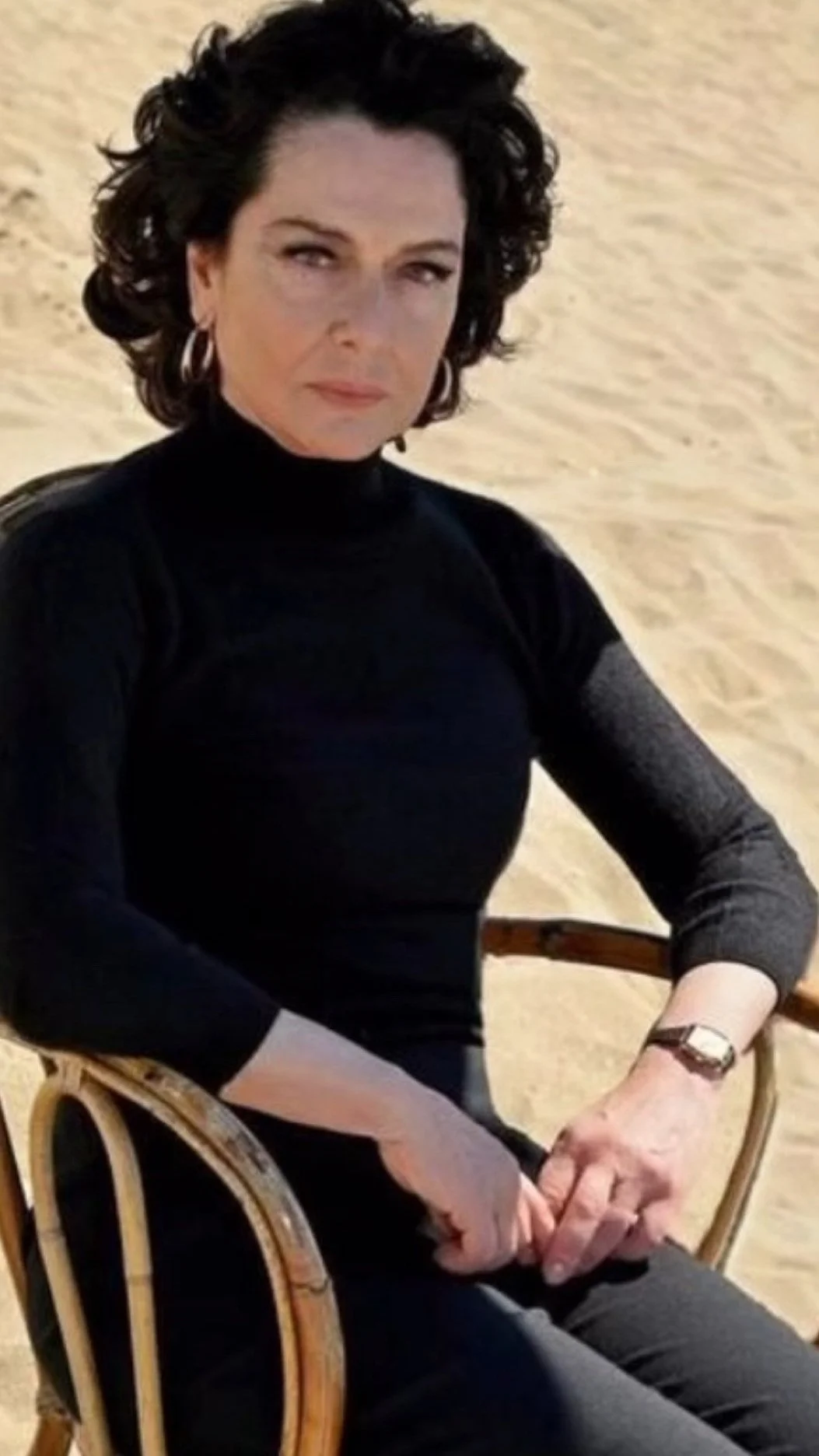
Monica Guerritore is a accomplished actress - theatre auteur - director - writer living in Rome, Italy.
Anna Magnani!
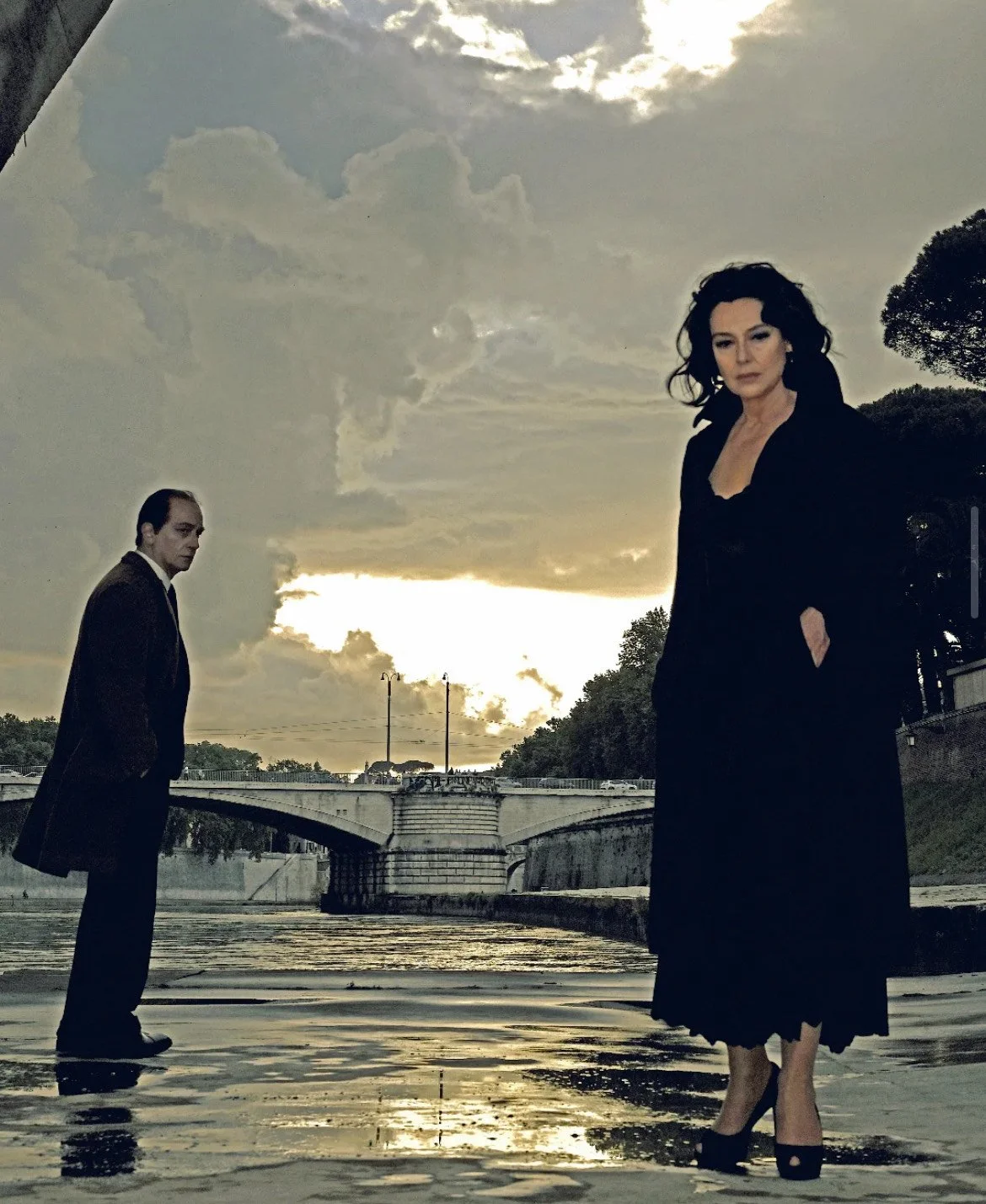
Anna, a poignant film crafted by Monica Guerritore, who writes, directs, and stars, marks a historic portrayal of Anna Magnani, Italy’s most cherished actress. On March 21, 1956, Anna triumphs by winning the Oscar for Best Actress for The Rose Tattoo. The night before, she wanders the vibrant streets and piazzas of Rome, embraced by a loving crowd and haunted by cherished memories. Beside her is Carol Levi, a young woman poised to become her agent.
As dawn breaks, Anna revels in her victory; however, fate takes an unexpected turn, relegating her to the margins just as she reaches the pinnacle of her career. The film unfolds Anna’s audacious and spirited journey—rich with humor amid chaos—delving into the cinematic realm of Cinecittà, fraught with conflicts with directors and poignant betrayals. Ever-present in her thoughts is Roberto Rossellini, whose lingering influence leaves an indelible mark on her soul, enduring despite the passage of time. He will return to her, steadfastly by her side until the very end.
This is the story of a woman who never surrendered her voice — even as the world began to move on without her.
FAQs
-
I'll put my feet in her shoes and I will listen to her heart to bring her back to us in order us to be moved by her passionate and painful human adventure enlightened by her immense talent, enforced by her fighting to defend her work and dignity. But we will make a deep, intense movie where at the same time things must flow easily because serious things are said and happen. For this is human life.
-
SYNOPSYS March 21st 1956, Anna cannot fall asleep. The Academy Awards ceremony is taking place in Hollywood and she is the first non-English speaking actress to be nominated for the Best Actress in a Leading Role Award. She will not be waiting next to that black phone. I imagined her out at night walking the streets of Rome with her beloved cats. The ancient ravines of ancient Rome. She needs to breathe the air of her streets, of her city. And it will be precisely her people, those in the streets at dawn, the waste collectors, milkmen, workers, women, etc. who will announce her victory and bring her joy… but it won't last. What happened next?As an author, a woman and an actress I must try to understand her. I feel the urge to comprehend and to tell that her immense talent was no longer a value, but, paradoxically, had become a problem, a burden in the new cinematographic reality. Cinema will leave behind the great interpreter celebrated in the whole world. "Women have no longer my face". The era of interpretation was over. That of verisimilitude began. She wasn’t needed anymore. I would like to imagine, explore and give words to her most hidden side: the lonely passionate woman who defends her talent with one man in her heart: Rossellini. A true deep and never ending story: he will be there when she calls him and won't leave her till the end.
How do I know? I don't know, nobody knows another human being’s secrets, intimate life, but an actress can feel it. I will be true to her even if not exact.
-
I imagine Anna Magnani as a very centred woman, with her feet slightly turned in and her walk horizontal, not forward. And then I imagine her with those eyes, that distinctive look, which is a look that I feel I have, which mine resembles. Above all, I won't have the problem of dark circles, bags, I won’t have to worry about age.
I would like long sequences, wide shots, in which we can see what is happening and how it happens, like in theatre. Mine will not be an imitation, however, it will be a female figure who has that same strength of personality and who wants to tell something. Anna Magnani can’t tell us anything anymore, but I urgently need to say what she went through. I believe that a touching ending is better than a banally consolatory one, and the ending of the film will be touching.
-
Inner solitude and lost love
The triumph and decline
-
Look, I’ll tell you the truth, I never thought I would write or direct a film about Anna Magnani. However, when Sofie Loren refused the role offered to her by Gabriele Lavia for La Lupa, I stepped forward,...then that photo of Anna Magnani came to my mind: I took it, I enlarged it, I put it in front of me and I built the character.
After reading Amidei’s story, I became interested in Anna Magnani. What was underneath Anna Magnani? I opened the biographies and took some things, not everything, because my idea was not to make a biopic. Subsequently, I reconstructed, made comparisons and saw that everything coincided. So, through fiction, I tell the truth. Maybe I won’t be exact in my film, but I will be true.
-
The interpreter always has an eye on the life of another person: this is my way of working, starting from the dramatic nodes of the story and, walking on these emerged lands, finding in the midst the feeling that unites them. So even with Anna Magnani, the construction work was in some way this. Her nocturnal walk, the night of the Oscar, from Palazzo Altieri to the archaeological ruins of the Teatro di Marcello to the embrace of Piazza del Popolo helped me to explain that, just like Rome, a person’s life is also up of various eras, of so much past, of so many events, and therefore Rome helped me to give this depth, otherwise everything is two dimensional. This walk is literally and metaphorically the starting point of the story. Then there is the day and the day takes away the mystery, the chiaroscuro, the unsaid, the implicit things, the depth: everything becomes clear. Here, I would like this transition to day after night to mark the entry, narratively and figuratively, into a new world, which is no longer that of Anna Magnani. It is the beginning of auteur cinema, still, immobile, in which she no longer finds a place…
-
She organized public script readings in theaters and universities to incorporate audience feedback. These served as creative test beds: audience feedback directly informed the script, making contributors feel like collaborators rather tan donars.
She’s working with cinematographer Gino Sgreva (DOP). He is responsible for visually realizing Guerritore’s vison.
She’s funding the film partly through crowdfunding in Italy and North America. In autumn 2023, LUMINAMGR - Guerritore’s production company formed with her husband Roberto Zaccaria - launched a Kickstarter campaign titled “FIRST FILM ON ANNA MAGNANI”. Guerritore described crownfunding as a “call to action” that places creative authority party in the hands of the public. The project also received funding from the Italian Ministry of Culture. Additional support came through RAI Cinema, a Swiss co-producer Catpix, and production partner Masi Film Srl.
-
In addition to Monica Guerritore in the lead role of Anna Magnani, serveral acclaimed Italian actors join the cast:
Tomassa Ragno as Roberto Rosselini. Anna Magnani and Roberto Rossellini shared a passionate, intense relationship - both romantic and artistic. Their patnership gave birth to masterpieces like Rome, Open City (1945), marking a turning point in Italian cinema.
Thouh their affair ende when Rossellini began a new relationship with Ingrid Bergman, his bond with Magnani remained historically significant.
Beatrice Grannò will take on the role of Carla “Carol” Levi. Carla “Carol” Levi appears to be a fictional or composite character—a young woman from Anna Magnani’s world, rather than a strictly historical figure. Based on set photos showing Monica Guerritore (as Anna) and Beatrice in an intimate scene, Carol is likely a confidante, companion, or symbolic representation of the younger generation influencing Magnani during her nocturnal journey through Rome.
Francesca Cellini as Suso Cecchi d’Amico. She represented a rare and valuable bond in Anna Magnini’s life - a union of creativity, trust, and female strength in a film world largely dominated by men. Their relationship went far beyond a series if successful collaborations:
They deeply admired and respected one another.
They were intellectual and emotional counterparts - women xho made their voices heard at the highest artistic levels, despite the barriers of their time.
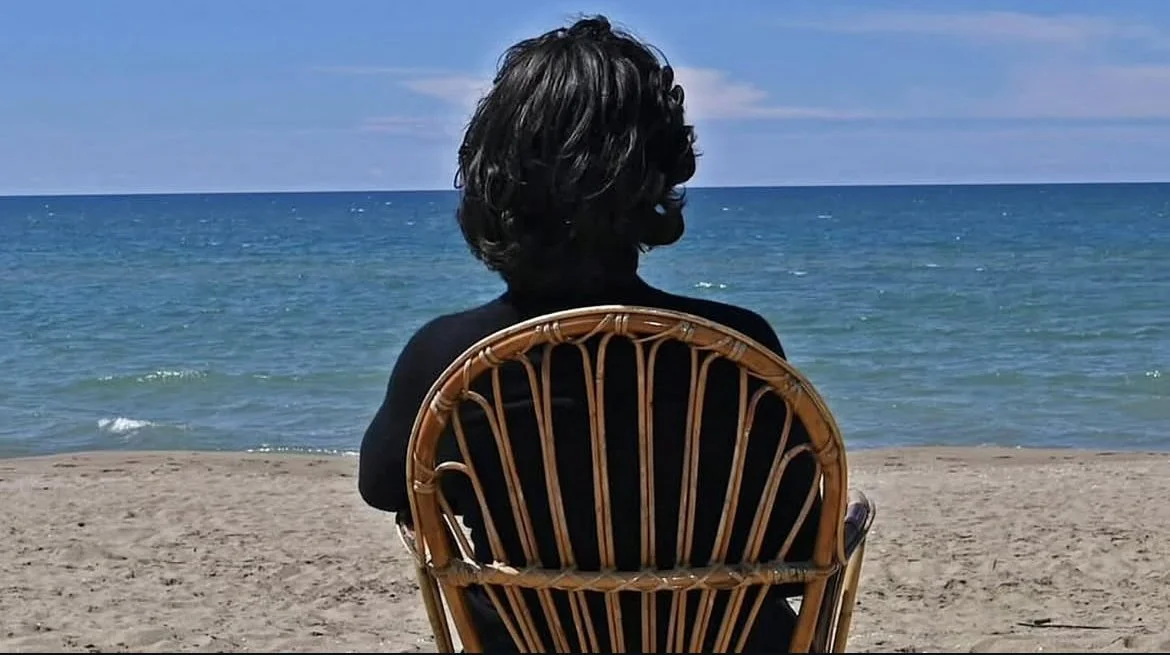
“ Non l’ho imitata né nella voce né nel viso. Insisto: le ho offerto me stessa, il mio viso, il mio corpo, la mia realtà d’attrice, persino i miei capelli. Saranno gli spettatori che si abitueranno lentamente alla sintesi finale. Anna era piena di colori interiori a tinte forti. E lo stesso vale per me ”
“Monica Guerritore”